NATIVE AMERICANS DREW ROCK PICTURES OF DINOSAURS 1,000 YEARS AGO!
Over 1,000 years ago, Native Americans called Anasazi made pictures of dinosaurs on rocks found in numerous locations of North America. They are fascinating pictographs and petroglyphs and tell an amazing story!
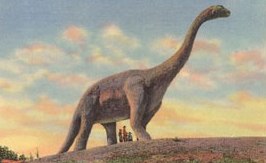
The petroglyph above was discovered at Bridges National Monument in Utah. With it's long neck and small head, it looks very similar to the Brontosaurus.
 This picture was taken in Grand
Canyon. The petroglyph (carved rock drawing) was
discovered in Arizona's Havasupai Canyon. To the right
is an artist's depiction of the dinosaur Edmontosaurus.

Pictured here is a close-up photo of one of the interesting "dinosaur" petroglyphs near Middle Mesa at the Wupatki National Park near Flagstaff, Arizona.
Petroglyphs are ancient figures carved into rock. They are preserved as permanent records of what the ancient artists must have seen.
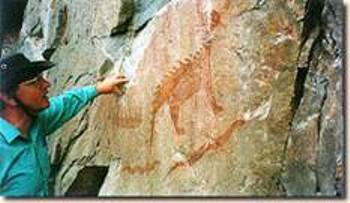 This pictograph (painted art work)
is found at Lake Superior Provincial Park in Ontario, Canada. Notice how similar it looks
to a stegosaur!
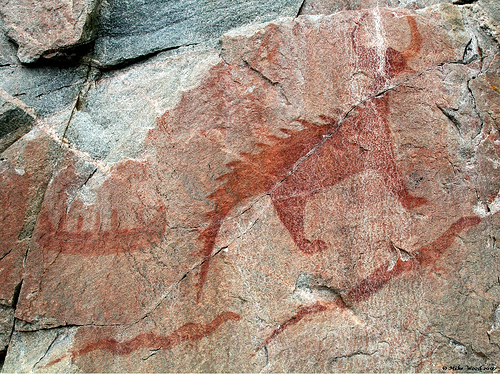
Enhanced picture showing the details of what appears to be a pictograph of a stegosaur dinosaur in Canada.
We need to remember that these rock pictures were made long before we had modern artist drawings of dinosaurs. There were no copies of National Geographic around to inspire the native artists!
FIRE BREATHING DRAGON?
This is an unusual and remarkable petroglyph of what appears to be a fire-breathing dragon:
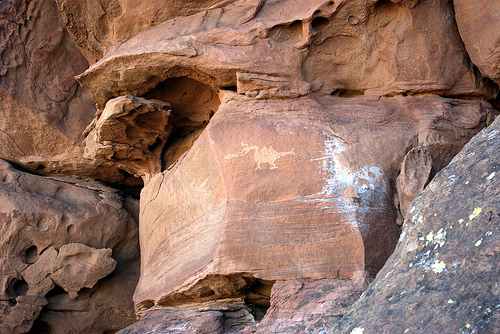
 This petroglyph can be seen at the
Wupatki National Park near Flagstaff, Arizona. It has been
named "Puff, The Magic Dragon!"
 This particular petroglyph appears to be a depiction of a
fire-breathing dinosaur. There is no certain way
to date such petroglyphs, but it is believed to be as
least several hundred years old. Did this Anasazi artist just have a
wild imagination or did he see something that we don't see in our
world today?
 Dr. Don Patton is shown here with an
Indian rock art that he believes depicts a Triceratops dinosaur.
This petroglyph (carving in rock) is in Montrose County, near
Montrose, Colorado Notice the three horns on the head of the
rock carving and how similar it is in appearance to what scientists
now believe Triceratops actually looked like.
 This ancient petroglyph is
attributed to the Fremont Indians who lived during the same time of
the southwestern Anasazi.
According to the evolutionary timescale, triceratops lived during the cretaceous period which was supposedly 65 to 145 million years ago.

CLICK HERE to see the pdf copy of this kids coloring picture!
CLICK HERE to continue your DINOSAUR TOUR.
Aol users must request information by using the following email:

OTHER INDEX FILES:











©2016 Discovery News
Native American rock art
has been discovered on many canyon walls located throughout the
southwestern areas of the United States. Many of the pictographs and
petroglyphs are over 1,0000 years old and appear to depict dinosaurs.
This raises the question: Did dinosaurs still exist while men walked
on planet earth. Did dinosaurs really live and become extinct over 65
million years ago?